
Our Mission
Science’s Best Friend
DOGS & HUMANS
Studying aging in humans is challenging and expensive, but dogs truly are science’s best friends. Even though they age more rapidly than humans, they experience the same diseases of aging, they are genetically diverse, and they share our environment. By studying aging in dogs, we can more quickly expand our knowledge of the aging process not just in dogs but in humans too!


MAXIMIZING HEALTHSPAN
At the Dog Aging Project, we’re focused on healthy aging not just lifespan extension. We want to understand the biological and environmental factors that influence aging and intervene to prevent debilitating decline.
We imagine a future in which we maximize healthspan—the period of life spent in good health and free from disease—allowing us many more years with high quality of life.
About Our Cohorts
Cohorts in the Dog Aging Project
We welcome ALL dogs—young and old, large and small, mixed breed and purebred, healthy and those with chronic illness—from all fifty US states. The only requirement is that you have a good estimate of your dog’s age.
From within the Dog Aging Project Pack, we enroll subsets of dogs into smaller cohorts based on specific scientific criteria. These cohorts include:
- Foundation - a genomics study that enrolled all types of dogs
- Precision - a biochemical study that enrolled all types of dogs
- Test of Rapamycin in Aging Dogs (TRIAD) - a double-blind, placebo-controlled clinical trial that is currently enrolling and has specific criteria

TRIAD Clinical Trial
ABOUT THE STUDY
The Test of Rapamycin In Aging Dogs (TRIAD) is a double-blind, placebo-controlled clinical trial of the mTOR inhibitor rapamycin, which at low doses has been shown to increase lifespan and delay or reverse many age-related disorders in mice. This is the third and largest trial of rapamycin that our group has conducted to date.
ELIGIBILITY
Eligible dogs must be healthy dogs at least 7 years of age and at least 44 pounds (20 kg) in weight whose owners are willing to bring their dogs to one of our participating clinical sites regularly.
To find out if your dog is eligible for TRIAD, complete the TRIAD Rapid Eligibility Assessment.
The world’s largest companion dog dataset
THE TERRA PLATFORM
We use a proprietary research platform powered by REDCap to collect a wide range of data types, including survey data, veterinary electronic medical records, activity data, geocoded environmental data, biological samples, and raw data from sample processing (such as genomic sequence data).

DATA ACCESS
The Dog Aging Project is an open science project committed to facilitating public access to de-identified data for many kinds of scientific inquiry. Researchers around the world can access Dog Aging Project data via Terra, a cloud computing platform hosted by the Broad Institute of MIT and Harvard.
DOG AGING PROJECT BIOBANK
Biological samples collected from dogs in the Precision and TRIAD cohorts are banked at the Dog Aging Project Biobank housed at the Cornell University Veterinary Biobank. Any researcher who wants to use samples collected by our project can apply for access through the Dog Aging Project. This kind of sharing is critically important for the advancement of science because it allows for new hypotheses to be tested as new research tools become available.

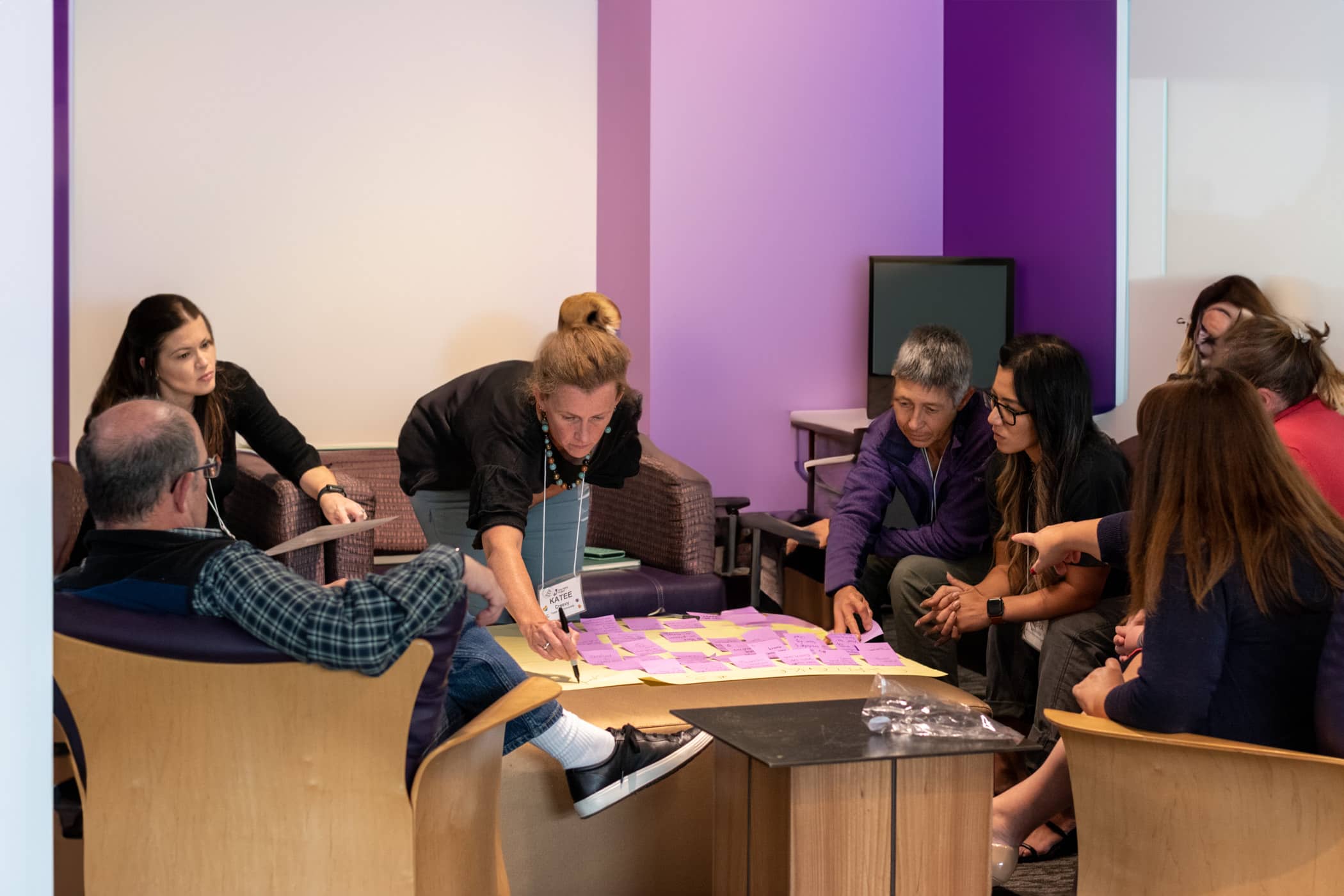
Culture of Collaboration
The Dog Aging Project has assembled an impressive team of researchers to expand our knowledge of the aging process. Our culture of collaboration fosters creative partnerships, which include experts from diverse disciplines at top research institutions. By working together with dog owners and primary care veterinarians, we have an unprecedented opportunity to find new and innovative health solutions.
Augusta University College of Science and Mathematics
Arizona Canine Cognition Center
Arizona State University Center for Evolution and Medicine
Arizona State University School of Life Sciences
Allen Institute for Brain Science
BluePearl Pet Hospital
Boston University
Broad Institute of MIT and Harvard
Cleveland Institute for Computational Biology
Colorado State University Flint Cancer Center
Colorado State University College of Veterinary Medicine and Biomedical Sciences
Cornell University College of Veterinary Medicine
Cummings School of Veterinary Medicine at Tufts University
Fred Hutchinson Cancer Research Center
Harvard Medical School Center for Bioethics
Iowa State University College of Veterinary Medicine
Midwestern University Animal Health Institute
Metropolitan Animal Specialty Hospital
National University of Singapore
North Carolina State College of Veterinary Medicine
Olympic Veterinary Cardiology
Oregon State University Carlson College of Veterinary Medicine
Pieper Veterinary
Princeton University Lewis-Sigler Institute for Integrative Genomics
SAGE Veterinary Centers
Santa Fe Institute
Seattle Children’s Research Institute
Specialists in Companion Animal Neurology
Tel Aviv University Sackler School of Medicine
Tel Aviv University Blavatnik School of Computer Science
Texas A&M College of Veterinary Medicine & Biomedical Sciences
The Animal Cardiology Center
University of Arizona
University of Georgia College of Veterinary Medicine
University of Illinois College of Veterinary Medicine
University of Massachusetts Chan Medical School
University of Pennsylvania Center for Translational Bioinformatics
University of Southern California
University of Washington College of Arts & Sciences
University of Washington College of Built Environments
University of Washington School of Medicine
University of Washington School of Public Health
University of Washington Social Development Research Group
University of Wisconsin School of Medicine and Public Health
Virginia-Maryland College of Veterinary Medicine, Virginia Tech
Washington State University College of Veterinary Medicine
Wheat Ridge Animal Hospital
Building diversity, equity, inclusion & belonging


The DAP team strives to create an inclusive environment in all aspects of our work.
DAP is committed to:
- Increasing the diversity of our team by creating funded opportunities for individuals from underrepresented and historically marginalized groups to join our team as staff, trainees, collaborators, researchers, and leaders.
- Increasing the diversity of project participants in terms of race, ethnicity, geographic location, socioeconomic status, education level, and all other characteristics that may be associated with varying health outcomes within human populations.
- Supporting and leading research efforts related to diversity, equity, and inclusion within our participant community and within our team.
Support Our Science
We have established the Dog Aging Project as an engine for innovation. We are supported by research grants from organizations like the National Institutes of Health (NIH) and the Dog Aging Institute. We also receive philanthropic donations from organizations and individuals. We are actively seeking additional support to sustain and expand our existing initiatives and to develop new, cutting-edge programs that will benefit dogs and people too. View Our Supporters page for more information
Our research data privacy agreement
The Dog Aging Project is committed to protecting our participants’ privacy and the security of their personal information. Our online privacy policy is available HERE. Our research data privacy commitment is summarized below.
- We respect the privacy of everyone associated with the Dog Aging Project and recognize that our research participants have volunteered to share their time and information with the DAP team in order to contribute to our scientific research.
- The DAP will never sell or share participant contact information.
- Only select DAP staff have access to the link between a dog owner’s personally identifying information and their dog’s health data.
- The DAP will make all reasonable efforts within the law to maintain the privacy and confidentiality of participant data.
- The personally identifying information of our participants, such as name and contact information, is encrypted and stored in a secure database.
- Canine health data are stored in our secure database under a unique identification number. This number does not include your actual name, address, or personally identifying information.
- When we share canine health data with our trusted research partners, these data do not include personally identifying information.
- In the unlikely case of a security breach, we will inform participants promptly.